
Revelation of the Ordinary
Or how I learned to stop worrying and love my life

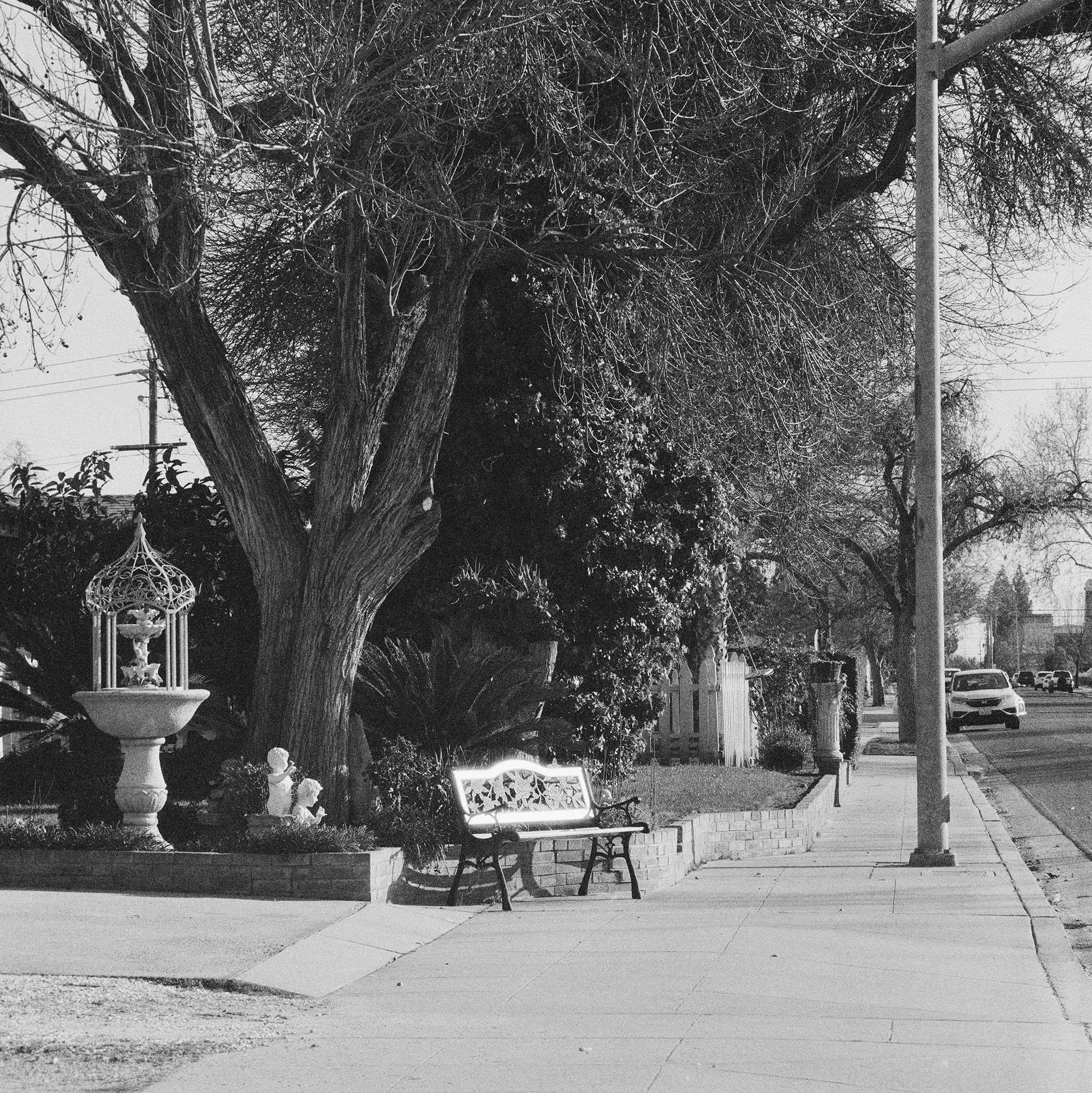
As far back as I can remember I’ve always felt like I was chasing something. There’s this feeling like something is missing and I’ve got to get this or that thing into my life if I want to fill the gap.
But no matter what I find or see or do, it never seems to do the trick.
You know what I’m talking about. This isn’t anything new. It’s a problem people have been facing for as long as stories have been told. Though I do believe this feeling is intensified in today’s ultra fast paced world.
Sometimes when people feel like something is missing they look to the past. They dwell on times in their lives when things felt more stable or more complete and they fixate on those memories, wanting nothing more than to go back to the way things were.
Other people find themselves focusing on the future. If I could just achieve this goal, or meet this person, or have this amount of money to buy this thing, then I would feel more complete and I could relax.
It’s a way of escaping from the present, but it’s not just that, it’s also a way of rejecting reality and living in the absence of gratitude.
Why aren’t things good enough as they are right now?
You may be able come up with a multitude of answers to this question, but that’s the problem.
There’s a great scene in the film Fight Club when Tyler Durden is giving a speech to some new inductees to the club. He says,
“We've all been raised on television to believe that one day we'd all be millionaires, and movie gods, and rock stars. But we won't. We're slowly learning that fact. And we're very, very pissed off.”
I believe that this observation is at the heart of a great deal of modern misery.
This is the take away from contemporary culture’s obsession with entertainment and celebrity: fame, money, glory. Without these things you are worthless, or so capitalist pop-culture and advertising would have you believe.
Social media has only amplified this message times one million. In this world of social media “influencers” and YouTube stars we want to believe now more than ever that we can and will be famous.
Somewhere along the line we decided that being ordinary was out of the question. To seek fulfillment in the plain, simple, day to day reality of life became passé.
We convinced ourselves that living in one place your whole life was foolish and unsophisticated.
We decided that we needed more of everything. More gadgets, more cars, more vacations, more entertainment, more distraction.
And in doing so we lost our ability to appreciate what we have.
We became preoccupied with the idea that nothing we have is good enough, that we aren’t good enough, that the only way to live life to it’s fullest is to have anything and everything we could possible want precisely in the moment we ask for it.
What an unfathomably self-absorbed way of existing.
We like to talk about privilege, and certainly there are some of us who have lived more privileged existences than others, but at least here in the Western world, we are all guilty of the apathetic expectation of entitlement.
The world owes us something, or so we think.
There is an old episode of This American Life which features an interview with Kevin Kelly, editor of Wired Magazine.
In the interview Kelly tells the story of a pivotal time in his life.
I won’t go into all of the details, but suffice it to say that he has a religious experience which brings him to ask himself the question: what would he do if he had only six months to live?
The conclusion he comes to is unexpected:
“To go back to my parents, to help them take out the trash and trim hedges and help them move furniture around, and to be with them. And I was really shocked by that, because I thought that with six months to live I would go climb Mount Everest or I would go scuba diving to the depths of the ocean, or I would get in a speedboat and see how fast it could go, but instead I wanted to go back home and be with my family for that time.”
And so he went home and he did exactly those ordinary things he describes.
He took this hypothetical question of his impending death with a seriousness that some might find odd or even insane, and began to imagine that he would in fact die in six months.
After some time at home, he realized that if he was going to die, he would want to see his brothers and sisters for the last time, so he decided to ride his bike across country to visit them.
Before he left he wrote up a will and gave away a large sum of money in cashiers checks which he sent anonymously to friends and family.
He would return from his cycling trip the day of Halloween, which would also mark the end of the six months, and the final day he had to live.
When he reached home, he had a pleasant but ordinary dinner with his parents, he gave out Halloween candy to the children who came to the door of his parents house, and finally he went to bed exhausted from his long journey and fell asleep.
He says that he fully believed at that time that he would not wake up the next morning.
But when the next morning came, he did wake up, and when he did, he realized that he had his entire life back.
This day was yet another ordinary day. But he was overcome with appreciation for his restored future.
“I was reborn into ordinariness, but what more could one ask for.”
Maybe we should all ask ourselves this question: what would I do if I had only six months to live?
Be careful though, because caught up as we are in our egos and who we think we are or want to be, it is easy to spout off an answer that lacks honest consideration.
Personally, I too would want nothing more than to be with my loved ones and those closest to me, though I wonder if I would have been willing to admit this to myself before hearing this story.
The conditioned response is to list off the “bucket list” items we’ve been told we must complete if we want to approach death without regret.
But think about this for a moment.
Imagine yourself on your death bed.
Really picture it. See yourself there sick, tired, alone, knowing you’re about to die.
What brings regret? Is it that missed opportunity to climb some mountain or achieve some glorified status? Or is it the opportunities we miss to connect with those we love each and every day?
Recently my grandmother died. She was 96 years old and we had anticipated her death for some time.
I was not close with her. She was a hard and cruel woman.
Yet after her death I found myself thinking how I wished I had asked her more questions toward the end. Questions about her thoughts on death and what it was like to know she was living out her final days.
Do I regret not knowing her better? Yes and no. No because she was not a person with any great wisdom to impart, but also yes, because there are worlds hidden inside each and every one of us that can never be uncovered unless we are willing to take the time.
My grandmother lived a very ordinary life. What made her life feel regretful was not the ordinariness but the way she carried herself through it.
She was a resentful, angry, unkind person who blamed all her life’s frustrations on her family, and in doing so, alienated everyone. Her death was not a graceful or dignified one, it was one tainted with the stench of bitterness and disappointment.
And that’s just the thing, when I think on her life I don’t think about what she did or did not achieve. She achieved a perfectly reasonable number of things in her long lifetime, including having been an excellent, award winning painter.
What I think about in measure of her success is not her achievements, but the content of her character and how she lived and loved.
Because we ALL live ordinary lives. Even the biggest celebrity you can think of still takes a shit each morning and brushes their teeth before bed at night.
Ordinariness is the stuff life is made of.
Ordinary mornings with ordinary routines, ordinary doubts, ordinary fears, ordinary worries, and if you’re lucky and you learn how to spot it, ordinary wonder.